
Annotations from the Archives: New Year, New View
After the holidays, many of us will turn our thoughts to setting goals and making a fresh start in a new year. In 1913, Willa Cather was doing the same thing. She was moving, but she was also in the middle of a sea change in her writing career. She had taken a type of sabbatical from McClure's Magazine editorial work and instead was finishing up proofreading Alexander's Bridge and beginning a new novel, which would become O Pioneers!. A new locale was just the thing! In this February 23, 1913, letter to her Aunt Franc, Cather wrote:
At last I have an apartment that is roomy, quiet, and that suits me perfectly. . . . The first month was given over to paperers and painters and furniture dealers. I actually had to write an article for the March number of McClures while the floors were being painted under my feet. But I have taken a good deal of pleasure in fixing the place up, for it is exactly the kind of apartment I have always wanted, and I had almost despaired of ever being able to find one that would suit me for a reasonable rental.
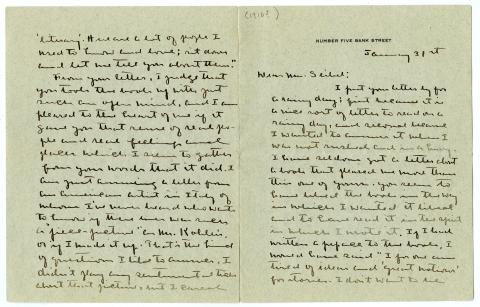
Cather was writing about her 5 Bank Street apartment, which she had rented with Edith Lewis the past autumn. This space would become her safe haven in the heart of Greenwich Village for the next fourteen years, until it was demolished for subway construction. The five-story brick building is now commemorated with a plaque noting Cather's residence near the intersection of Waverly Place and Bank Street. No photos are extant of Cather's building, but just up the block, typical New York rowhouses boast high ceilings and parquetry floors, elegant mouldings and mantels, and generous windows overlooking "the quintessential urban street.” It's easy to imagine, browsing Bank Street on Zillow, Cather and Lewis filling their gracious rooms with books, art, and literary-minded friends.
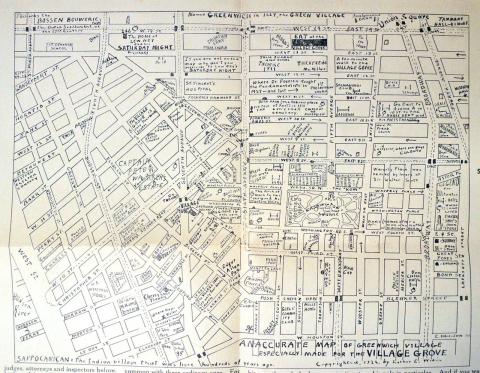
Greenwich Village must have been an exciting place for Cather. Though she was moving to New York from Pittsburgh, which had its own universe of artists, industrialists, and social movements, the Village was a world apart. It was home to The Masses, a socialist magazine; artists like John Sloan whose art depicted daily life in the Village; salons hosted by socialites like Mabel Dodge; labor organizers, suffragists, and social reformers; theaters, musicians, and actors. Ethnic divisions were shoulder to shoulder in the Village, and all of this was concentrated in less than a half square mile.
Wherever you are, we hope your community is full of exciting people and possibility. We're looking forward to another year of collecting and curating the oldest collection of Willa Cather material anywhere—and sharing it with you! If you're in the neighborhood of Red Cloud, you can always book an archives tour or make an appointment for research by visiting our website, or reaching out to archivist Tracy Sanford Tucker at ttucker@willacather.org. We would love to show you what's new in 2026!
Sources:
"Inside Greenwich Village: A New York City Neighborhood, 1898-1918," by Gerald W. McFarland
"Mapping Greenwich Village Saturday Night," Graphic Arts Collection, Firestone Library at Princeton University.
Letters from the George Cather Ray Collection at the University of Nebraska-Lincoln
Letters from the Willa Cather Pioneer Memorial Collection at the National Willa Cather Center
Greenwich Village Society for Historic Preservation
The Only Wonderful Things: The Creative Partnership of Willa Cather & Edith Lewis, by Melissa Homestead